Loading...
Searching...
No Matches
memory_test.cpp File Reference
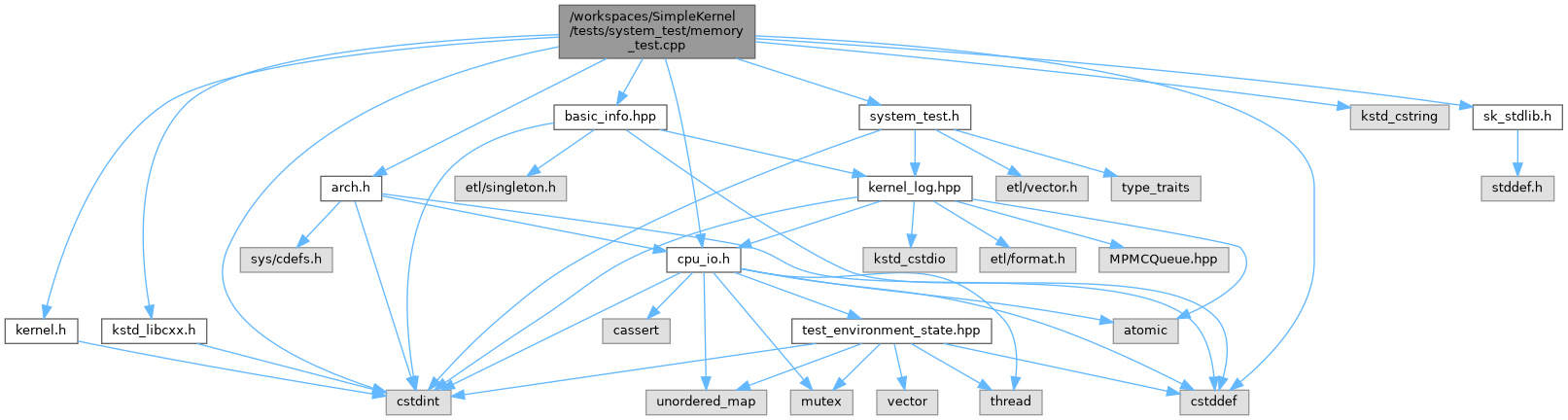
#include <cpu_io.h>#include <cstddef>#include <cstdint>#include "arch.h"#include "basic_info.hpp"#include "kernel.h"#include "kstd_cstring"#include "kstd_libcxx.h"#include "sk_stdlib.h"#include "system_test.h"
Include dependency graph for memory_test.cpp:
Go to the source code of this file.
Functions | |
| void * | malloc (size_t size) |
| void | free (void *ptr) |
| void * | aligned_alloc (size_t alignment, size_t size) |
| auto | memory_test () -> bool |
Function Documentation
◆ aligned_alloc()
| void * aligned_alloc | ( | size_t | alignment, |
| size_t | size | ||
| ) |
Definition at line 58 of file memory.cpp.
58 {
59 if (allocator) {
60 return allocator->aligned_alloc(alignment, size);
61 }
62 return nullptr;
63}
Here is the caller graph for this function:

◆ free()
| void free | ( | void * | ptr | ) |
Definition at line 38 of file memory.cpp.
38 {
39 if (allocator) {
40 allocator->free(ptr);
41 }
42}
Here is the caller graph for this function:

◆ malloc()
| void * malloc | ( | size_t | size | ) |
- Copyright
- Copyright The SimpleKernel Contributors
Definition at line 31 of file memory.cpp.
31 {
32 if (allocator) {
33 return allocator->malloc(size);
34 }
35 return nullptr;
36}
Here is the caller graph for this function:

◆ memory_test()
| auto memory_test | ( | ) | -> bool |
Definition at line 24 of file memory_test.cpp.
24 {
26
27 // Test 1: malloc & free
28 size_t size = 1024;
31
32 // Write and read verification
33 auto* byte_ptr = static_cast<uint8_t*>(ptr);
34 for (size_t i = 0; i < size; ++i) {
35 byte_ptr[i] = static_cast<uint8_t>(i & 0xFF);
36 }
37
38 for (size_t i = 0; i < size; ++i) {
40 "memory_test: verify failed");
41 }
42
43 free(ptr);
45
46 // Test 2: aligned_alloc
47 size_t alignment = 256;
48 size_t aligned_size = 512;
51
53 "memory_test: aligned_alloc alignment failed");
54
55 free(aligned_ptr);
57
58 // Test 3: Multiple small allocations
59 const int count = 10;
60 void* ptrs[count];
61
62 for (int i = 0; i < count; ++i) {
63 ptrs[i] = malloc(128);
65 // Fill
66 kstd::memset(ptrs[i], i, 128);
67 }
68
69 for (int i = 0; i < count; ++i) {
70 auto* p = static_cast<uint8_t*>(ptrs[i]);
71 for (int j = 0; j < 128; ++j) {
73 }
74 free(ptrs[i]);
75 }
77
78 return true;
79}
auto Info(etl::format_string< Args... > fmt, Args &&... args) -> void
以 INFO 级别记录日志
Definition kernel_log.hpp:182
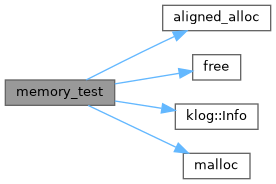
Here is the call graph for this function: